NZ Tech Jobs & AI: What Recruiters say is really happening
Author :
Mission Ready
The question we hear most often is simple:
“Is it still a good time to shift into tech in New Zealand?”
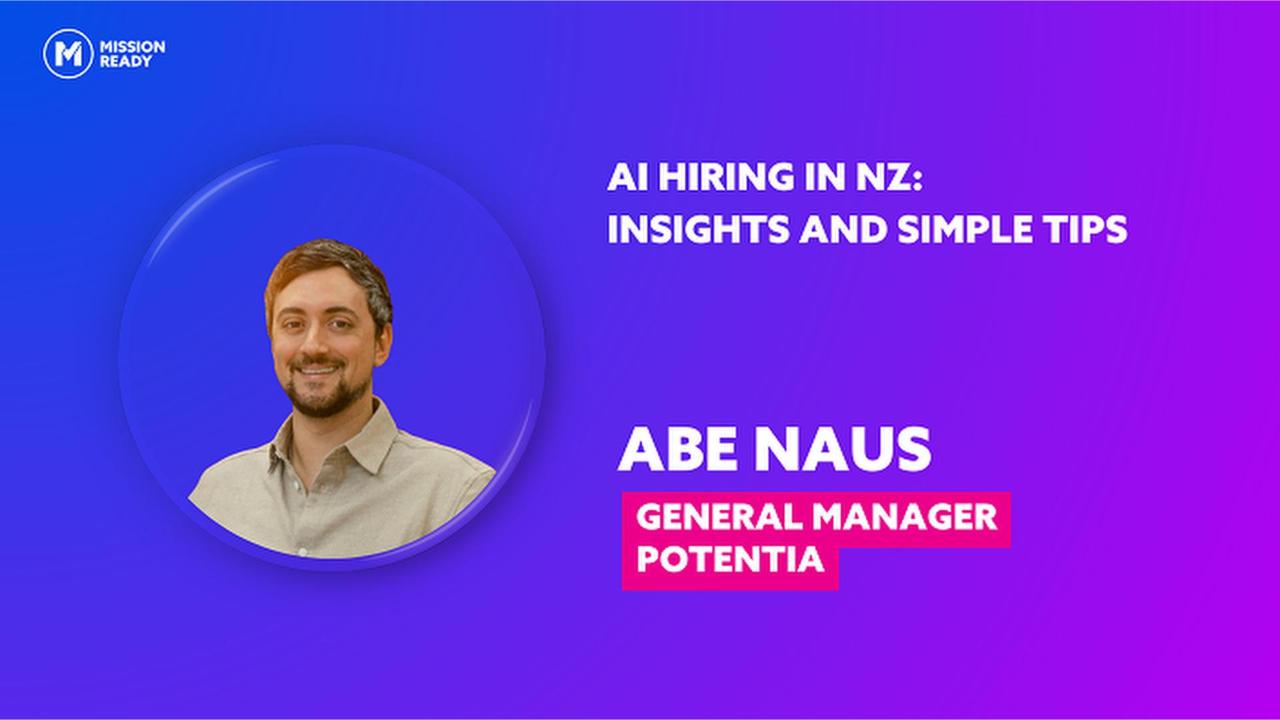
To answer that properly, Mission Ready CEO Diana Sharma sat down with Abe Naus, General Manager at Potentia, one of New Zealand’s largest specialist tech recruitment firms. Abe and his team talk to hiring managers, founders and candidates daily — which gives them a rare signal-rich view of the market.
This quarterly briefing brought together two sides of the ecosystem:
What employers are hiring for
What talent needs to be ready for
And how AI is reshaping both at speed
Below is a clear, data-backed summary — written for anyone exploring a tech career move, planning to upskill, or trying to stay relevant in an AI-accelerated workplace
The New Zealand tech job market is lifting — finally
For two years, hiring was slow. That has shifted.
Key data points Abe shared:
NZ tech job ads have risen — the strongest upward movement in ~24 months.
OCR dropped by 0.25 — lowering borrowing costs, improving business confidence and creating early heat in the labour market.
Recruitment leaders across industries are reporting the same upward trend, not just tech.
Talent competition remains fierce — meaning job seekers need to be visibly skilled, AI-literate and market-ready.
In short:
Demand is rising. Supply is high. Prepared candidates win.
AI adoption in NZ businesses is now mainstream — and measurable
Abe shared the numbers Potentia sees across their client base:
91% of NZ organisations are seeing efficiency gains from AI
77% report operational cost savings
50% report direct financial benefits
AI strategy adoption has increased from ~30% to a clear majority within 6–12 months
These aren’t theoretical savings. Much of this comes from everyday use:
drafting emails
producing presentations
analysing notes & documents
speeding up repetitive cognitive work
But the shift is deeper:
AI setup costs have dropped significantly, making adoption accessible to SMEs, not just large enterprises.
And critically, across New Zealand’s SME market, leaders are consistently saying:
“We’re using AI to make our people faster and more effective.”
This directly contradicts the popular assumption that AI is being used primarily for headcount reduction. In New Zealand, that is not the prevailing reality.
The talent in highest demand in NZ right now (2025–2026)
Abe sees four clusters accelerating:
1. AI & Machine Learning Engineers
But not as isolated specialists. Organisations want:
More contracting and multi-engagement work The modern contractor often works across 2–3 organisations, especially in engineering, AI and data.
Outcome-based statements of work Instead of large teams, businesses buy: “Here is the outcome, the budget and the timeframe.” This rewards clarity, communication and measurable results.
Preference for “buy + integrate” over “build from scratch” Because:
This, in turn, creates more demand for API skills, integration knowledge and systems thinking.
The skills NZ employers now expect across nearly every tech role
These came through strongly:
Technical Capabilities
Fluency in at least one coding language (NodeJS, Python, SQL, or equivalent)
Understanding of APIs and when/how to use them
Ability to prototype quickly (including through AI-assisted tools)
Comfort operating alongside cloud infrastructure (Microsoft, AWS, Google — all expanding locally)
AI Literacy
Ability to use AI tools effectively without outsourcing judgement
Prompt engineering fundamentals
Understanding of bias, hallucination and validation
Ability to explain privacy, safety and risk controls
Knowledge of NZ’s emerging AI guardrails and guidelines
Communication & ROI Thinking
This is one of the most overlooked skill sets.
Employers want candidates who can:
articulate a business problem
frame the solution
quantify the uplift (speed, accuracy, cost saving)
explain the guardrails
communicate in plain English
Abe’s phrase summed it up:
“Lead with impact metrics, not model names.”
A practical way to stand out — even with no experience
Abe was unequivocal: the most compelling candidates are those who arrive with real, self-directed work.
You don’t need a degree to do this. You need action.
Build a small prototype.
Use tools like Lovable, Replit, etc. Start from a problem statement. Ship something.
Bring it into the interview.
Share your screen. Walk through:
the problem
your architecture
the privacy & security checks you applied
the risks you considered
the ROI you expect
Very few candidates do this. Those who do immediately differentiate themselves.
Develop critical thinking by pitching to real people
Friends, whānau, colleagues — anyone who can give blunt feedback.
This strengthens communication skills faster than any course.
So… is it a good time to shift into tech in NZ?
Yes — if you prepare intentionally.
Abe’s data and insights point to a simple truth:
Tech careers in New Zealand are still full of opportunity, but the bar has moved.
The winners in 2026 will be those who:
are AI-literate
can build or prototype ideas
understand privacy and security
speak the language of business value
show evidence, not promise
This aligns directly with why Mission Ready exists: to prepare people for the actual expectations of NZ employers, not the job descriptions of three years ago.
If you’re considering a shift — or need to stay relevant in your current role — now is the time to get deliberate.